
Digverse Lab
Adventures and workshops
A guided learning journey where every child builds strong foundations, creates increasingly ambitious projects, and connects math, science, and engineering with real-world scenarios, helping students apply STEM knowledge through problem-solving, design, experimentation, and teamwork.

12 Week Program
Eiffel Tower
STEM ADVENTURE
This is a project-based STEM program centered around an Eiffel Tower journey in Paris. Students explore a virtual Eiffel Tower environment and take on roles such as engineers, photographers, transportation planners, and CEOs.
While working toward the final mission of “saving a tourism company,” they learn about structures, light and shadows, smart transportation, and related math concepts.
About 70% of the program is hands-on, using 30+ types of materials and 20+ science experiments. The course connects math, science, and engineering with real-world scenarios, helping students apply STEM knowledge through problem-solving, design, experimentation, and teamwork.
Students experience a complete problem-solving cycle using Inquiry-Based Learning (IBL):
Observe → Question → Model →
Design → Experiment → Validate
The model adopted for this Science education project is project-based learning (PBL).
• 20+Scientific Experiments
• 3 Themes, 10+Key Concepts
• 38+ Lab tools
• 1 project, 4 roles
This is an immersive science learning experience in 3D Virtual Scenery specifically designed for students in Grades 3-5. This project adopts an online merged offline learning model. In the online part, students enter the Virtual Scenery of the Eiffel Tower in Paris to observe specific scientific phenomena. In the offline part, students conduct hands-on experiments to explore the principles of the phenomena they see in the Virtual Scenery.
Engineer: analyze the tower's materials, structure, and stability
Photographer: apply principles of light, shadow, and optics
Traffic Coordinator: plan routes and calculate distance and speed
Chief Executive Officer (CEO): pitch the tourism proposal in a final presentation
Students will be able to:
-
Apply scientific knowledge in everyday situations (e.g., using light and shadow for photography)
-
Use mathematical models to analyze real-world challenges (e.g., smart traffic solutions to reduce congestion)
-
Apply engineering thinking to design solutions (e.g., using math & physics to build bridges with greater load capacity)
-
Learn triangular stability through building structural models
-
Understand thermal expansion through testing materials
-
Apply the linear propagation of light through pinhole imaging
-
Develop math models to solve traffic problem in the city
-


12 Week Program
Triassic STEM ADVENTURE
Triassic Period Scenario: Students travel back in time and work together to complete the final mission of rescuing a Plateosaurus named Siri.
Along the way, they explore life science by learning about ferns, cycads, ginkgo trees, dinosaurs, and other living things. Students also apply math and engineering concepts to real-world rescue challenges, including tree-planting problems, water flow, drainage, gears, and levers.
Through hands-on building with plastic rods, popsicle sticks, and other materials, they design rescue stations, water channels, balance scales, catapults, and small weirs. The program combines science, math, engineering, problem-solving, and experimentation in an immersive adventure.
Explore Paleontology and Rescue the Dinosaur!
Online 30%:
Enter the Triassic setting via educational software for an immersive exploreation of the era's ecosystems, flora, and fauna, while completing educational tasks through hands-on online activites
Offline 70%:
Math Olympiad Style Problems • Construction Machinery Hands-On Building • Scientific Experiements (Build Water Supply Systems and Transport Vehicles) • Problem Solving and Application
Paleontology knowledge utilizes a PBL (Project-Based Learning) and OMO (Online-Merge-Offline) model. Student's ultimate mission is to return to the Triassic Era and complete a series of challenges to rescue Siri the Dinosaur!


1. Extended STEM Activities
Students have more time to design, build, and complete hands-on experiments related to the regular curriculum. Activities may include weirs, gears, levers, buoyancy, and other classic science and engineering challenges.
2. Mortise-and-Tenon Building
Students have more time to work on larger and more complex construction projects, such as Safari, Ranch, Farm, Garden, and Bridge designs.
Mortise-and-tenon is a traditional woodworking technique that joins wooden pieces together without nails or metal fasteners. More Details (link to the mortise-and-tenon introduction)
3. Logic & Puzzle Games
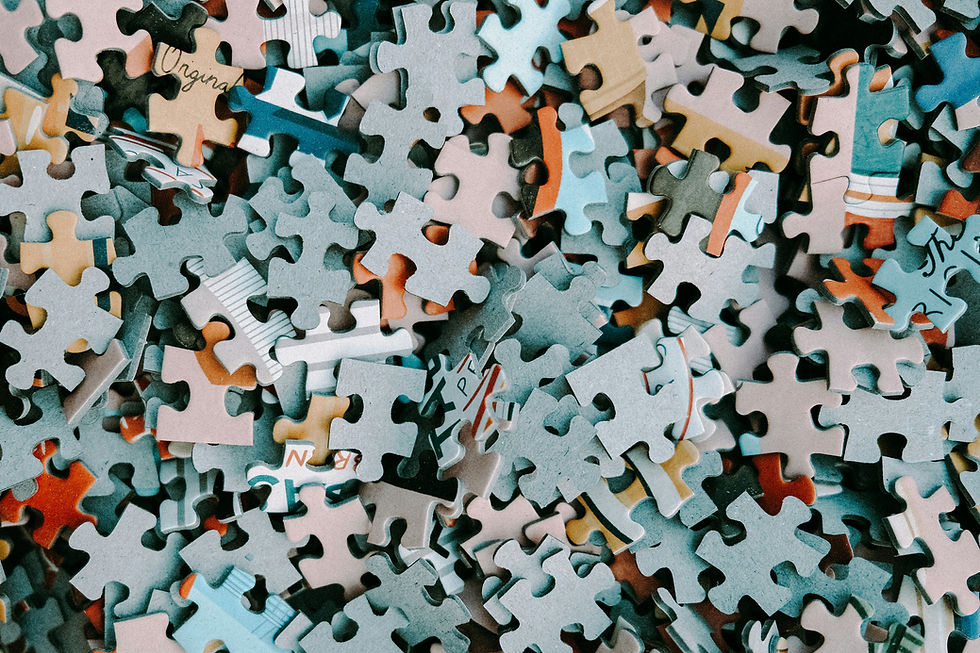
Students explore a variety of hands-on logic and spatial reasoning games, including Luban Locks, Tangrams, Huarong Dao, Nine Linked Rings, and Chroma Cube.
The Workshop includes three main themes:
Digverse Lab
Example Workshop TOPIC
Introduction to Mortise-and-tenon TECHNIQUE
Mortise-and-tenon is a traditional woodworking technique that joins wooden pieces without nails or metal fasteners. It uses precisely shaped interlocking joints, such as protruding “tenons” and matching “mortises,” to hold structures together.
This method creates strong, stable, and flexible connections while allowing the wood to expand and contract naturally. It has been widely used in traditional Chinese architecture and furniture for thousands of years. Today, mortise-and-tenon structures are increasingly used in education, hands-on crafts, toys, and other learning activities.
Mortise-and-tenon structures have a history spanning thousands of years. Early craftsmen discovered that by precisely shaping pieces of wood, different components could interlock and connect securely without relying on nails or metal fasteners.
Over time, mortise-and-tenon techniques became increasingly sophisticated and were widely used in traditional East Asian architecture, furniture, bridges, temples, and palaces. Craftsmen developed many different types of joints to meet different structural needs, creating wooden structures that were both strong and flexible.
One of the most remarkable features of mortise-and-tenon construction is its ability to distribute forces throughout a structure while allowing wooden components to move slightly under stress rather than break easily. This made the technique especially valuable for large timber structures.
Today, mortise-and-tenon joinery is not only an important part of traditional craftsmanship, but also an excellent hands-on way for children to explore engineering, structural design, geometry, spatial reasoning, and problem-solving.


Accelerated Development
Our camps develop critical thinking, problem-solving, and collaborative skills that set a strong foundation for middle and high school success.
Confidence Building
Every experiment, project, and innovation opportunity is designed to help kids discover their strengths, trust their ideas, and gain confidence through hands-on accomplishments.
Discovery
Kids engage in daily experiments where they test hypotheses, build prototypes, and learn that mistakes can be valuable elements of successful design thinking
Growth Mindset
Through open-ended challenges and reflection, campers develop a growth mindset that helps them tackle problems with resilience, creativity, and enthusiasm.